 America Brief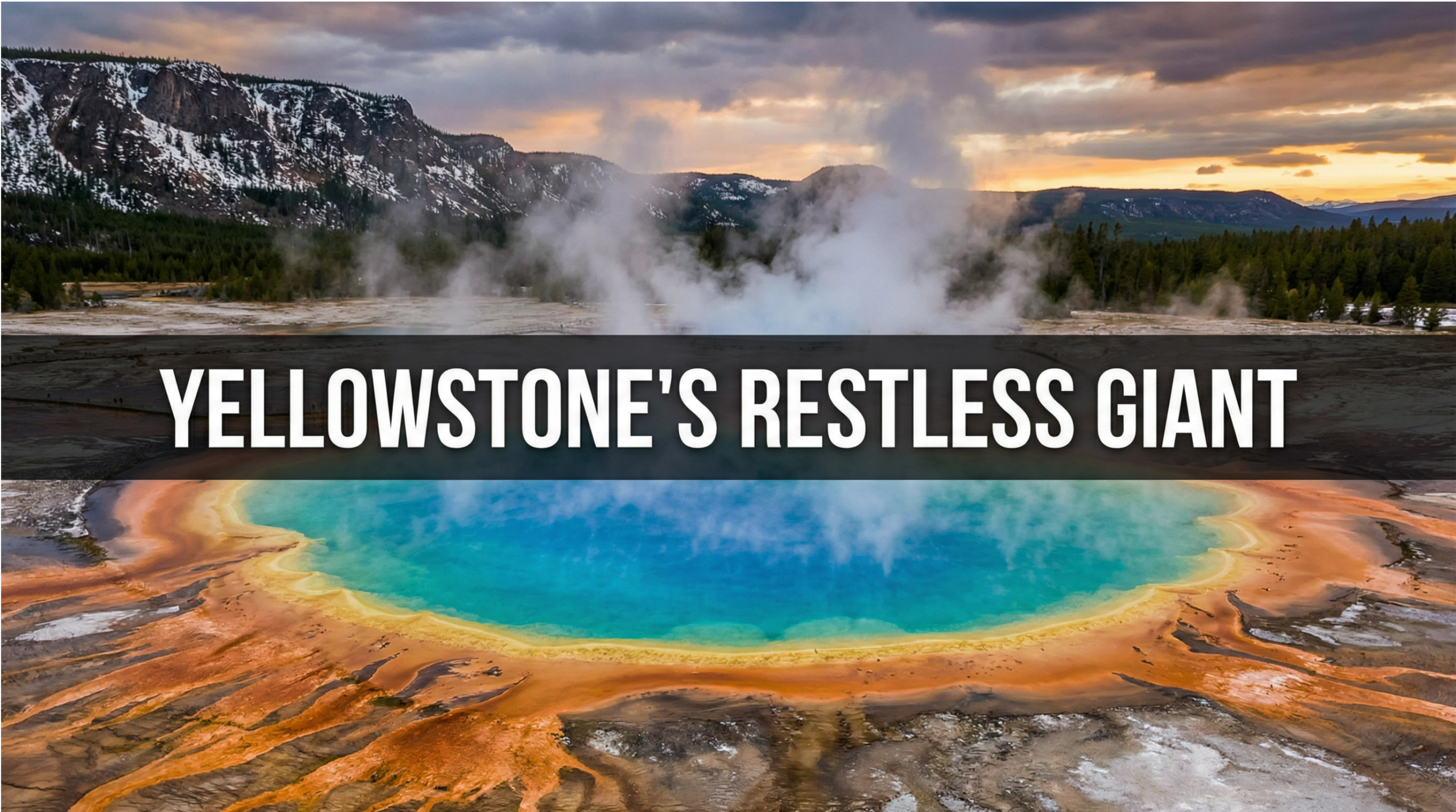
Yellowstone National Park, a landscape renowned for its geysers, hot springs, and abundant wildlife, is also home to one of the world’s largest and most active supervolcanoes. While the dramatic hydrothermal features on the surface captivate millions of visitors each year, scientists are equally fascinated by the powerful forces at work deep beneath the ground. Recently, researchers at the Yellowstone Volcano Observatory have been closely tracking a significant geological phenomenon: a large area of ground uplift on the northern rim of the caldera.
This bulge, stretching approximately 20 miles in the vicinity of Gibbon Falls, has risen by about an inch since July of 2025. While this may not sound like much, it is a clear indication of substantial changes occurring far below the surface. According to Mike Poland, the scientist in charge at the Yellowstone Volcano Observatory, the source of this uplift is located about 10 miles deep within the Earth’s crust. “It is a sign of some pretty dramatic changes happening deep underground,” Poland stated. “The source of this is 10 miles deep, so there’s a lot of rock between there and the surface, but it still has the energy to push the surface up—even if it’s only about an inch that is still impressive.”
Scientists believe the most likely cause of this ground deformation is the movement of “magmatic fluid.” This is not the first time such an uplift has been observed in this part of the park. The observatory uses a sophisticated network of GPS monitoring stations and satellite radar to track these subtle shifts in the ground. This technology allows for a level of monitoring that was impossible in the past, providing a much clearer picture of the volcano’s behavior.
Despite the alarming sound of “magmatic fluid” and “ground uplift” in the context of a supervolcano, Poland and his team are not overly concerned about an imminent eruption. “That sounds alarming, I know—Yellowstone Volcano and all— but at that depth, it’s not something we are particularly worried about,” he explained. “It’s well below the surface. It’s not showing any signs of rising.”

For a volcanic eruption to occur, the magma would need to move much closer to the surface. This would be accompanied by a host of other warning signs, such as a significant increase in the size of the bulge, changes in earthquake patterns, and alterations in the composition of gases released from the ground. As a point of comparison, Poland noted that before the 1980 eruption of Mount St. Helens, the bulge on the mountain’s northern flank was growing by several feet per day—a rate of change far exceeding what is currently being observed at Yellowstone.
The last time Yellowstone experienced an eruption where magma reached the surface was an estimated 70,000 years ago. While the volcano is still very much active, the chances of a major eruption in the near future are considered to be extremely low. The current ground uplift is seen not as a sign of impending doom, but as a fascinating opportunity for scientific study.
“But we now have the technology to detect it and to track it and to characterize it. So, I think it is kind of a golden age of exploration for geology in Yellowstone,” Poland said. The ongoing monitoring at Yellowstone is a testament to the advances in volcanology and our ability to understand the complex processes that shape our planet. For the scientists at the Yellowstone Volcano Observatory, the restless giant beneath the park is not a source of fear, but a source of endless wonder and discovery.
References
[1] KTVQ. (2026, February 10). Scientists monitoring ground beneath Yellowstone National Park.