
 America Brief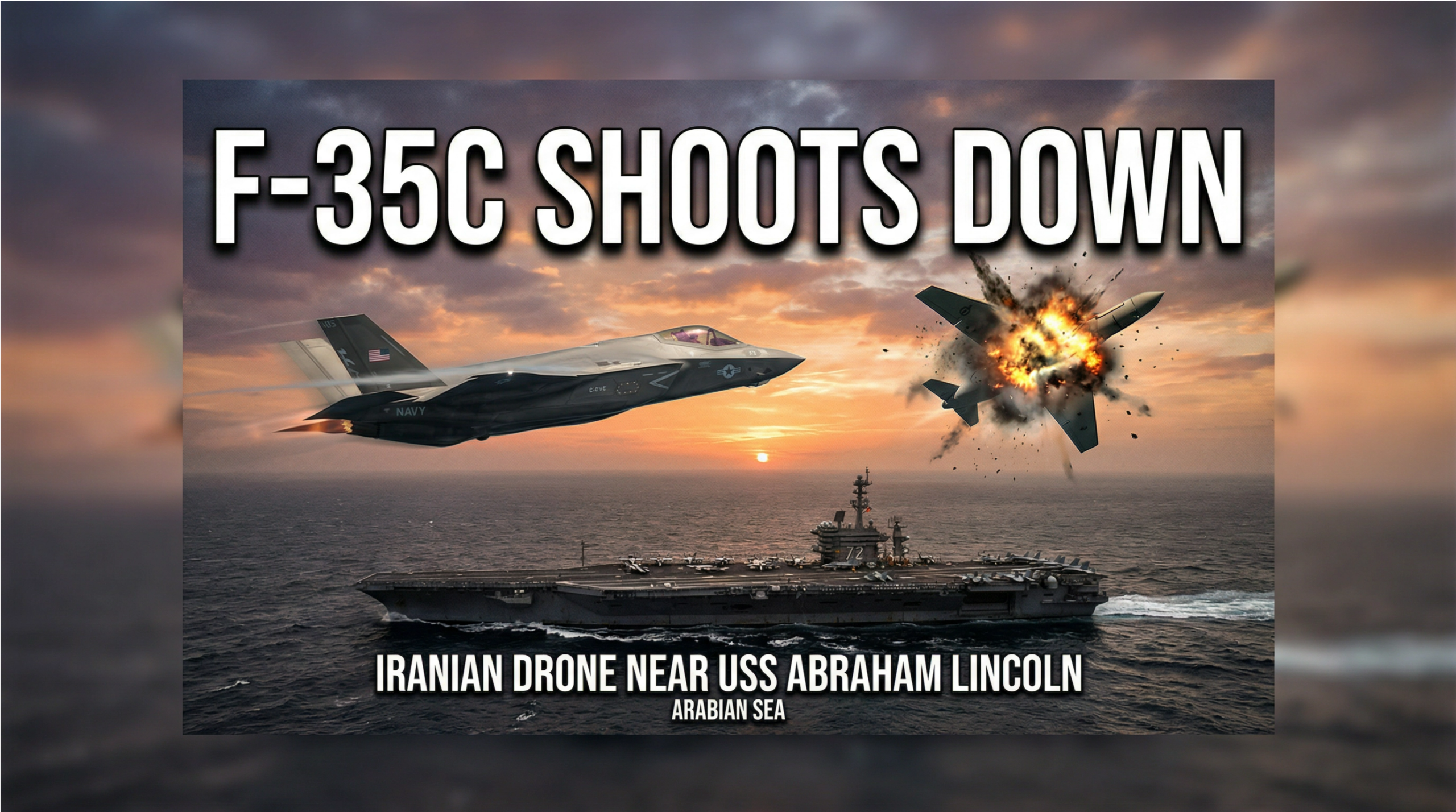
A U.S. F-35C fighter jet shot down an Iranian Shahed-139 drone that was approaching the USS Abraham Lincoln in the Arabian Sea — an action justified by U.S. officials as necessary self-defense.
In a dramatic escalation of naval tensions between the United States and Iran, American forces shot down an unmanned Iranian aircraft as it approached the U.S. Navy’s USS Abraham Lincoln aircraft carrier in the Arabian Sea earlier this week. The incident, described by military officials as a defensive maneuver, occurred just as diplomatic talks and broader geopolitical negotiations with Tehran were gaining renewed urgency.
According to U.S. Central Command (Centcom), an F-35C stealth fighter jet dispatched from the carrier strike group intercepted and destroyed the Iranian drone after it repeatedly closed on the warship with “unclear intent” despite repeated warnings and de-escalation efforts. The engagement underscores how fragile the security environment has become in and around strategically vital waterways.
What Happened: The Intercept in International Waters
On Tuesday, while the USS Abraham Lincoln strike group was operating in the northern Arabian Sea — roughly 500 miles from Iran’s southern coast — a Shahed-139 drone controlled by Iranian forces began a direct approach toward the carrier. U.S. military officials said the aircraft did not respond to repeated attempts to alter its course or back away, leading commanders to regard it as a potential threat to the safety of the ship and crew.
In response, a U.S. Navy F-35C — a fifth-generation multi-role stealth fighter — engaged and downed the drone before it could reach striking distance. U.S. officials were quick to emphasize that no American service members were injured and no U.S. equipment was damaged in the encounter.
Pentagon spokespeople characterized the action as defensive and necessary to protect U.S. forces operating in international waters, noting that all efforts were made to deter the unmanned aircraft before it was destroyed.
The Broader Military Context
The Abraham Lincoln carrier strike group has been operating in Middle Eastern waters amid a backdrop of intensifying U.S.–Iran friction. The U.S. has bolstered its naval presence in the region, deploying multiple warships and aircraft in recent weeks as part of what defense analysts describe as pressure tactics designed to support diplomatic negotiations while deterring hostile actions.
The carrier group’s presence near the Strait of Hormuz and in the Arabian Sea comes against a backdrop of longstanding tensions over Iran’s nuclear program, regional proxy conflicts, and repeated confrontations with Western naval forces. While Tehran and Washington have engaged in various rounds of diplomacy — including proposed talks in third-party countries — incidents like this demonstrate that military brinkmanship remains a very real part of the relationship.
The Iranian Drone: Shahed-139 and Its Implications
The unmanned aerial vehicle involved in this episode, the Shahed-139, is part of a broader class of Iranian drones that have been used for surveillance and other military missions. While Tehran offers varied accounts regarding how and why drones are deployed, U.S. officials have treated such aircraft as potential threats when they approach closely and refuse to alter course.
Iran has previously used drones in regional conflicts and contested waterways, most notably in areas like the Red Sea and Persian Gulf. Some models are designed for reconnaissance, while others can carry ordnance. The U.S. military’s decision to engage this particular drone suggests that it saw no viable alternative given the proximity and trajectory of the aircraft.
Despite the downing, officials have not stated that the drone was carrying weapons, and the exact purpose of its movement toward a U.S. aircraft carrier remains under analysis.
Concurrent Incident in the Strait of Hormuz

The drone shoot-down was not an isolated episode. Hours later — and within the same general region — Iranian Islamic Revolutionary Guard Corps (IRGC) forces reportedly harassed a U.S.-flagged merchant vessel, the M/V Stena Imperative, in the Strait of Hormuz. According to U.S. military statements, two high-speed boats accompanied by another drone approached the ship at a fast pace and threatened to board it.
U.S. Navy assets, including destroyers, intervened and escorted the tanker safely out of the contested area, ensuring the situation did not spiral further. This second encounter highlights how maritime security conditions in this region can escalate rapidly, impacting both military and commercial traffic.
Strategic and Political Stakes
This incident arrives at a moment of heightened geopolitical scrutiny: the United States and Iran have engaged in sporadic negotiations over Tehran’s nuclear ambitions and regional influence. While talks have been planned and even tentatively scheduled — aimed at reducing the risk of a broader military confrontation — episodes like the downing of the Shahed drone can complicate diplomatic momentum.
Several experts note the confidence signal that the United States sends by defending a carrier strike group so far from American waters. A carrier such as the USS Abraham Lincoln is one of the most sophisticated naval assets in the world, capable of projecting air power, supporting ground operations, and providing layered sensors and defenses. Its positioning in Middle Eastern waters is both a deterrent and a reassurance — deterring hostile actions and reassuring allies of continued U.S. engagement in regional security.
At the same time, Tehran may view such maneuvers as provocations or demonstrations of American muscle, particularly as internal political pressures and economic sanctions weigh on the Iranian leadership.
What Comes Next?
The downing of the drone is unlikely to be the final word in U.S.–Iran tensions for the near term. Analysts anticipate several follow-on developments:
- Diplomatic Repercussions: Iranian officials may either denounce the shoot-down as excessive force or frame it as justification for strengthening their own defenses. How Tehran communicates the event domestically and internationally will matter for future negotiations.
- U.S. Messaging: Washington is expected to re-emphasize that the action was defensive and aimed purely at preventing a threat to American forces.
- Regional Reactions: Neighboring Gulf states and other Middle Eastern governments will be watching closely, as any escalation between Washington and Tehran carries potential implications for regional stability and energy markets.
- Military Posture: The U.S. military has signaled that it will continue vigilance in international waters, balancing deterrence with restraint to avoid inadvertent escalation.
In an era where unmanned systems and hybrid warfare tactics are increasingly common, this incident underscores how delicate modern military engagements can be — especially when they unfold far from home and against a backdrop of simmering geopolitical rivalry.
Key Takeaways
- A U.S. F-35C fighter jet shot down an Iranian Shahed-139 drone that was approaching the USS Abraham Lincoln in the Arabian Sea — an action justified by U.S. officials as necessary self-defense.
- No U.S. personnel or equipment were wounded or damaged during the encounter.
- A separate confrontation occurred later near the Strait of Hormuz when Iranian vessels confronted a U.S.-flagged tanker, prompting U.S. naval intervention.
- The incident adds complexity to ongoing diplomatic efforts with Iran and reflects the tense security dynamics in the region.